
Inform
Fruit Flies Turn Up in South Sound Kitchens This Fall. How Are You Handling Them?
Tuesday's poll, Nov. 17, asks South Bay, Johnson Point and Boston Harbor neighbors how they are handling fruit flies this fall. Extension experts say to start by refrigerating or tossing ripe produce, then trap the adults.
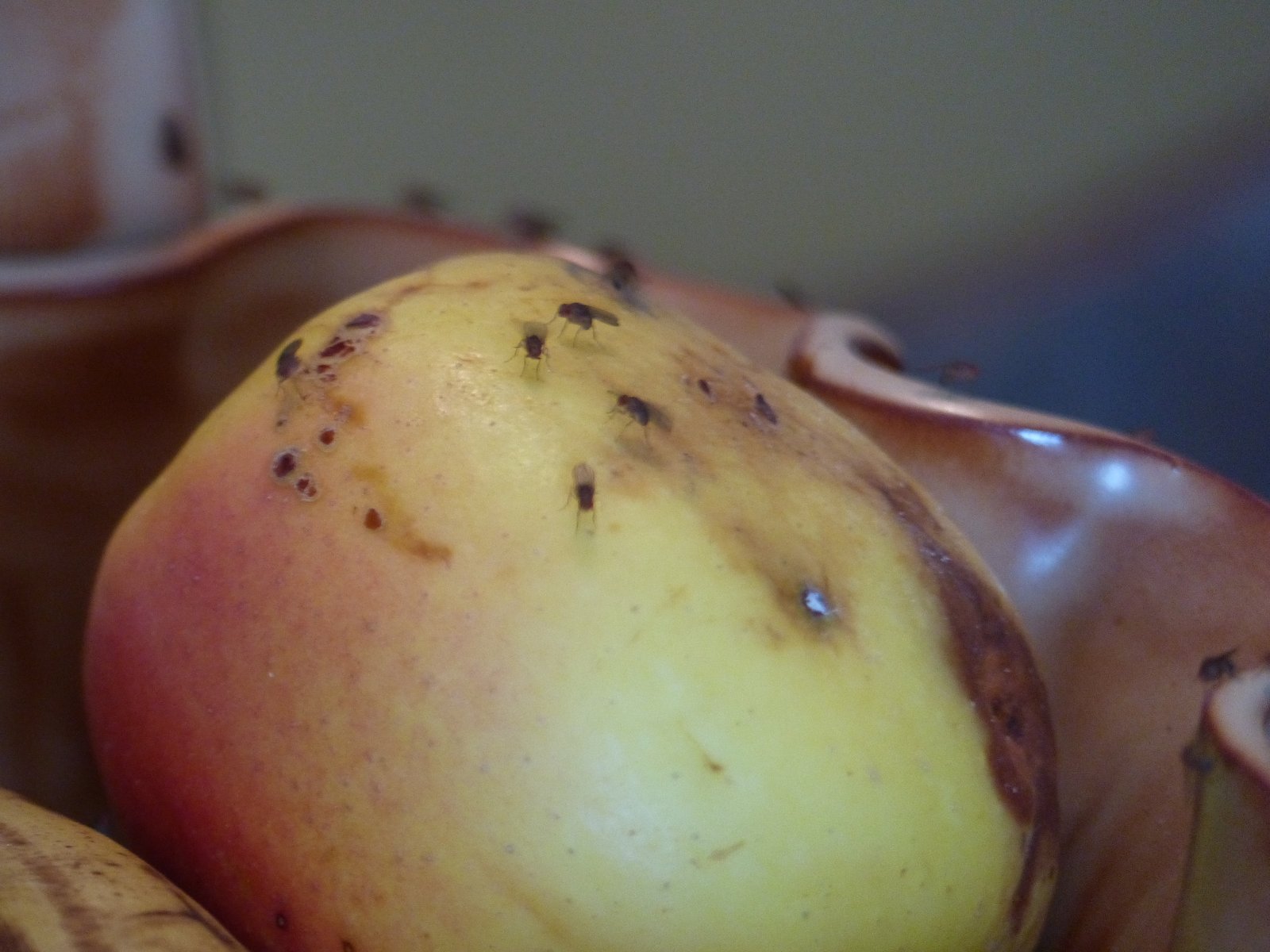
Fruit flies are turning up in kitchens around South Bay, Johnson Point and Boston Harbor. How neighbors are handling them is the question in Tuesday's poll, Nov. 17.
The adults are about 1/8 inch long, usually with red eyes and a tan-and-gray body, according to Washington State University's Pestsense fact sheet. In late summer and fall, "their numbers peak exponentially due to the availability of decaying fruit," a WSU Yakima Extension column says. A female can lay up to 500 eggs, and a fly develops from egg to adult in about a week, WSU says.
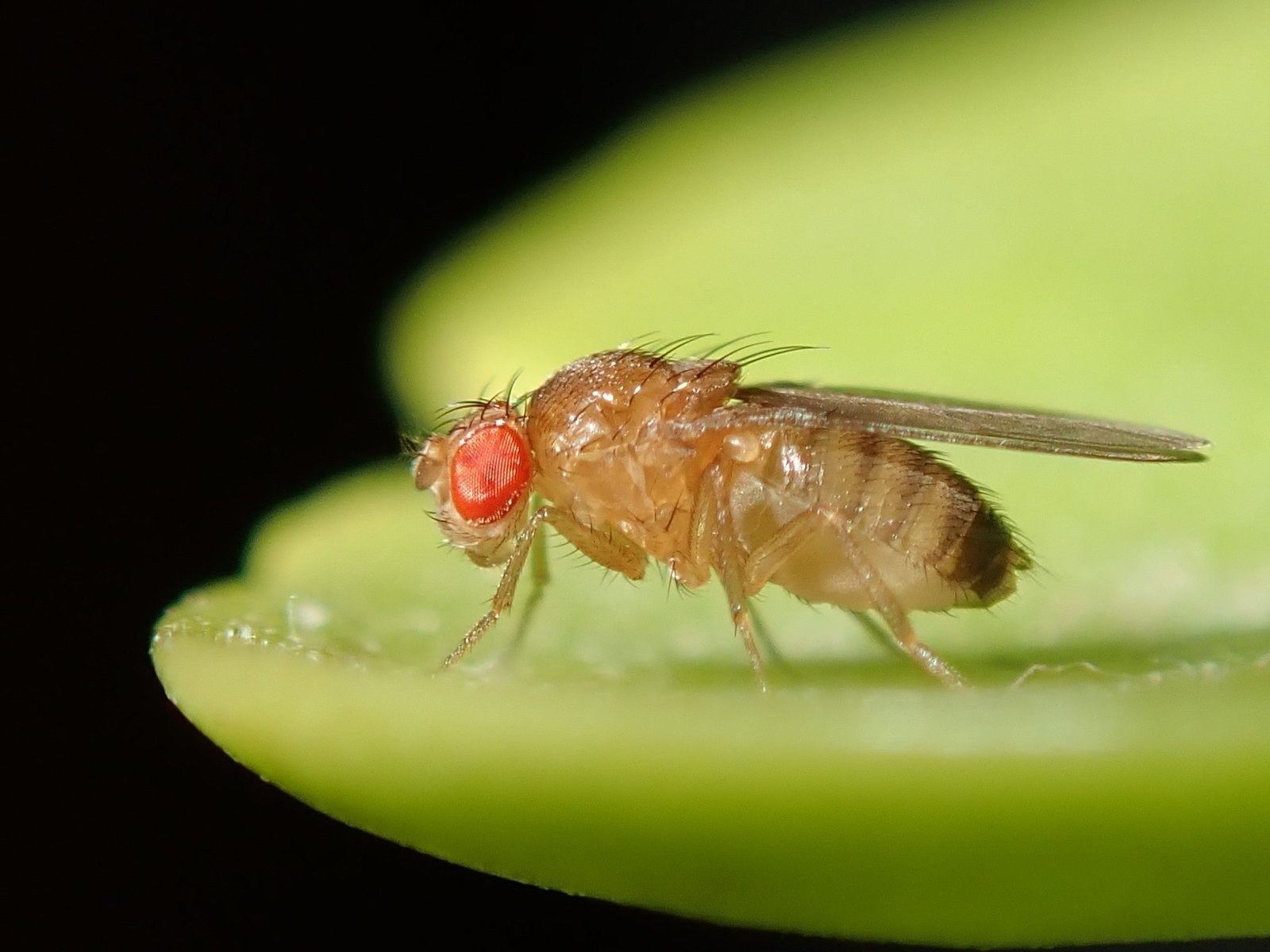
Start by removing what they breed in. Eat, toss or refrigerate ripe produce, and look for a forgotten potato or spilled juice, WSU advises. The flies also breed in drains, trash and damp rags. University of Maryland Extension recommends rinsing recyclables and letting mops dry.
To catch flying adults, extension sources describe homemade traps. One uses apple cider vinegar with a drop of dish soap, often covered with plastic wrap poked with small holes, Maryland Extension and the WSU column say. Another is a paper cone set narrow-end down in a jar baited with juice or rotting fruit, Michigan State University Extension says. Maryland Extension and Cornell University's Integrated Pest Management program say stores also sell small vinegar traps.
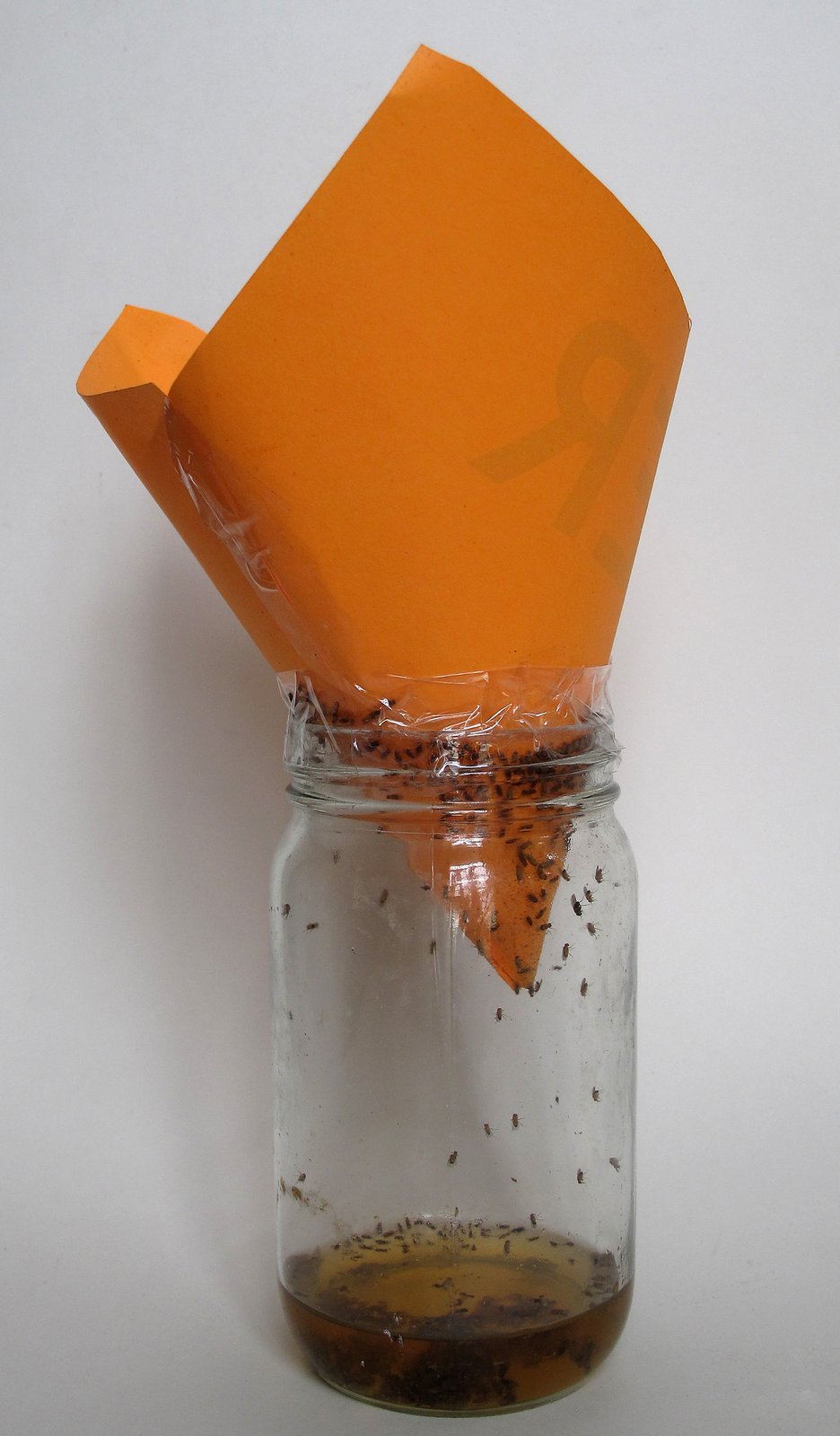
Traps catch adults, which may already have laid eggs. Purdue University extension entomologist Timothy Gibb writes that "most fly traps are ineffective" and that a combination of sanitation and exclusion is "really the only long-term resolution."
This Week's Poll: How are you handling fruit flies this fall?
- Refrigerate or toss ripe fruit
- Apple cider vinegar trap
- Paper cone jar trap
- Store-bought trap
- I don't have flies in my house
Vote in this week's poll at www.soundneighbors.com.
Sources
- WSU Pestsense, Fruit flies fact sheet
- WSU Yakima County Extension, Fruit Flies, Carol Barany, Aug. 24, 2024
- Michigan State University Extension, How to get rid of fruit flies in your home, David Lowenstein, Oct. 3, 2023 (updated from Howard Russell)
- University of Maryland Extension, Fruit Flies (updated Oct. 17, 2024)
- Cornell IPM, Fruit Flies
- Purdue Extension Entomology, How to Easily Remove Pesky Fruit Flies From Your Home, Timothy J. Gibb, HN-66, 2009
- Photo: Drosophila melanogaster on apples, Tsaag Valren, Wikimedia Commons, CC BY-SA 4.0
- Photo: Drosophila melanogaster 53362116, Alexis via iNaturalist, Wikimedia Commons, CC BY 4.0
- Photo: Fruit fly trap, Downtowngal, Wikimedia Commons, CC BY-SA 3.0
File photo · Fruit flies on a ripening apple, Josselin, France, April 24, 2019, by Tsaag Valren, CC BY-SA 4.0, via Wikimedia Commons, resized (https://commons.wikimedia.org/wiki/File:Drosophila_melanogaster_on_apples.jpg)