Inform
Orca Watch: Killer Whales Reach South Sound Inlets, but the Day Can't Be Forecast
Killer whales do come through the waters around Johnson Point and Boston Harbor, usually as seal-hunting Bigg's orcas and, more rarely, as endangered Southern Residents following fall salmon. Sighting networks can describe those patterns. They cannot predict the day.
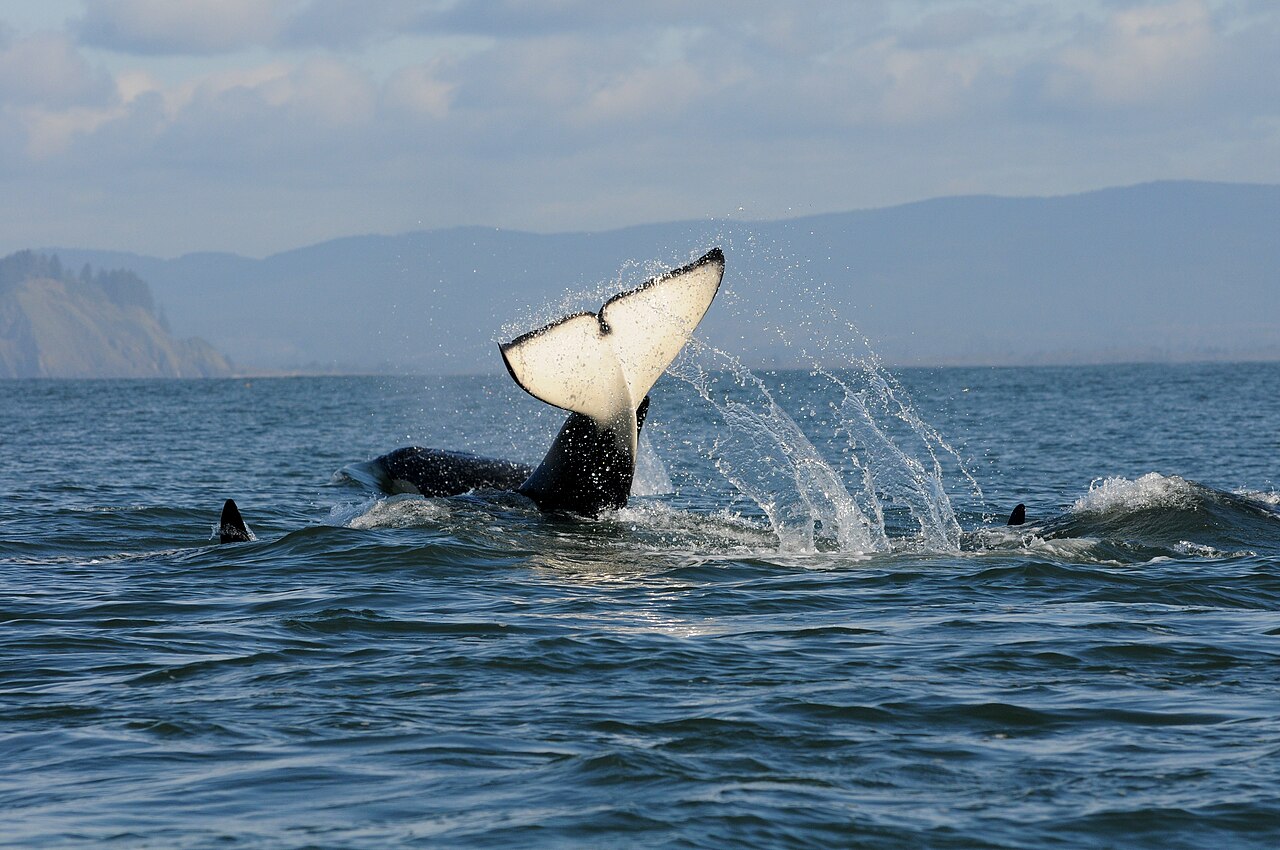
Three mammal-eating killer whales turned up hunting harbor seals at the Port of Olympia on Thursday, March 12, 2026, after swimming south from Vancouver, B.C., through Seattle and Tacoma, according to KUOW and Orca Network. Researchers cataloged them as T419, T420 and T421, new to regional Bigg's catalogs.
Can anyone predict when orcas will come through Henderson, Budd, Eld, Case or Totten inlets, Dana Passage or Nisqually Reach? The short answer, from the people who track them, is no. Seasonal patterns are real. A precise forecast is not.
Orca Network keeps the most complete public record of whale movements in Washington's inland waters. It vets sightings sent through an online form, the hotline 866-ORCANET (672-2638), email at [email protected], and the group's Facebook community. Its most recent emailed report, dated Nov. 6, 2026, placed J pod in inland Puget Sound earlier that week.
Other sources include The Whale Museum's hotline in Friday Harbor, 1-800-562-8832 or [email protected], active since 1976; Cascadia Research Collective in Olympia, which accepts unusual large-whale reports at 360-943-7325 but does not run a public orca sightings feed; the Center for Whale Research's Southern Resident census; and the Pacific Whale Watch Association's private Salish Sea reporting app.
Two kinds of orcas, two reasons to visit
Most killer whales that reach the inlets around Olympia are Bigg's orcas, also called transients. They hunt marine mammals, especially harbor seals, and travel in small groups. That is the type documented at the Port of Olympia in March, and the type Orca Network listed in South Puget Sound on Sept. 20 and 21, 2026, when the T36s and T137A were reported there. ThurstonTalk reported a pod off Boston Harbor in mid-December 2014.
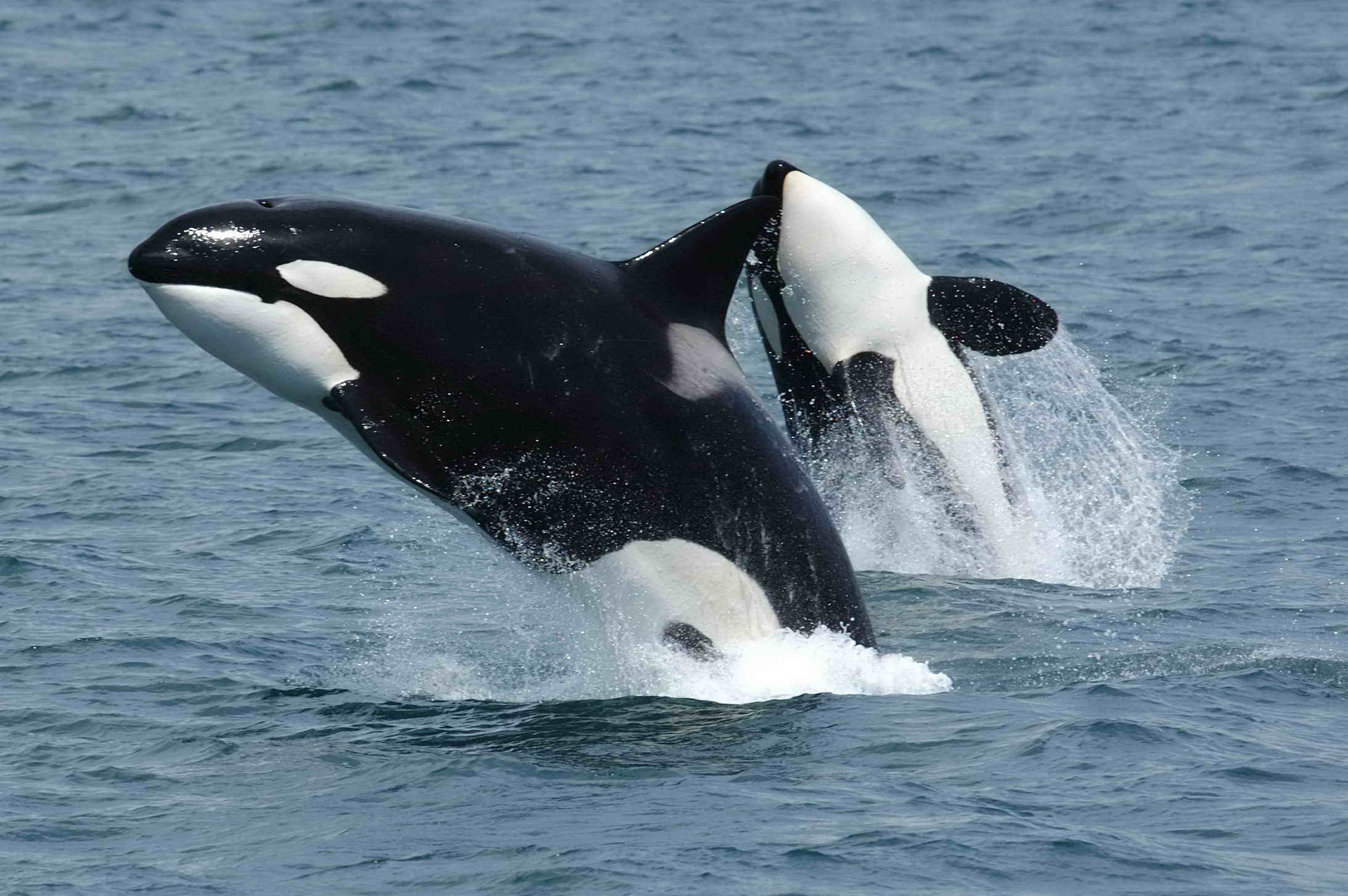
The other type is the Southern Residents — J, K and L pods — an endangered, salmon-eating population. NOAA Fisheries says they have historically spent much of the summer in the inland Salish Sea feeding on Chinook, and "in the late summer, fall and early winter, they also turn to coho and chum salmon as Chinook decline in number." J pod can be expected in Central Puget Sound in the fall when chum are running, the Puget Sound Institute reported in October 2025.
Those patterns still do not amount to a calendar for Budd Inlet or Dana Passage. On Sept. 19, 2025, most of J pod went south through the Tacoma Narrows into Carr Inlet and, on Sept. 20, approached Anderson Island before heading north, according to the Puget Sound Institute and the Vashon-Maury Island Beachcomber, both citing Orca Network. Orca Network called it J pod's first documented trip south of the Narrows in several decades. The published accounts do not place those whales in Budd Inlet, Henderson Inlet or off Johnson Point.
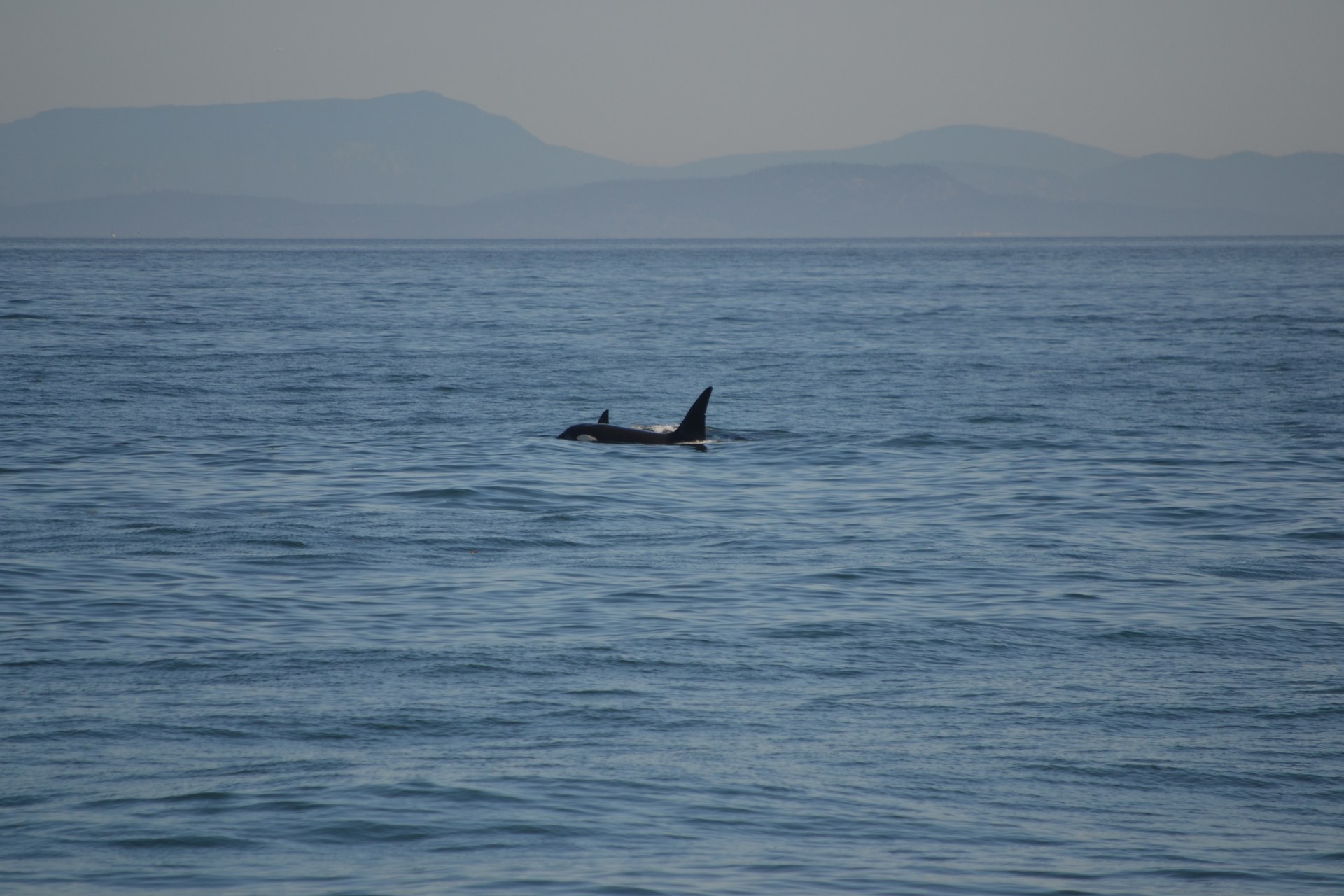
Monika Wieland Shields, director of the Orca Behavior Institute, told the Puget Sound Institute that Southern Residents are more predictable than Bigg's killer whales but remain "prone to unexpected travels." "With such a socially and behaviorally complex animal, I think it's nearly impossible to divine what might motivate them to do one specific thing," she said. "It's only over time that we can start looking for patterns."
If you see them
Report a sighting to Orca Network through its online form, by calling 866-ORCANET (672-2638), or by emailing [email protected]; to The Whale Museum at 1-800-562-8832 or [email protected]; or through the Ocean Wise Whale Report or Whale Alert apps, which can feed alerts to commercial mariners. Include the date, time, location, number of animals and direction of travel. Watch from shore when you can.
In Washington inland waters, federal rules at 50 CFR 224.103(e) make it unlawful to approach any killer whale within 200 yards, or to position a vessel in a whale's path within 400 yards. NOAA also says the Marine Mammal Protection Act requires staying at least 100 yards from whales generally.
Washington's rules, in effect since Jan. 1, 2025, under RCW 77.15.740, are stricter for Southern Residents. Vessels, including kayaks and paddleboards, must stay 1,000 yards away, move out of the whales' path at no more than 7 knots if inside that distance, and disengage the transmission if a Southern Resident comes within 400 yards and it is safe to do so. For other killer whales, including Bigg's, WDFW says stay at least 200 yards away, and at least 100 yards from any other whales. WDFW recommends that untrained boaters treat unidentified killer whales as Southern Residents and stay 1,000 yards away.
Sources
- Orca Network, Report Whale Sightings
- Orca Network, Whale Sighting Network
- Orca Network, March 12, 2026, Whale Sighting Report
- Orca Network, Sept. 22, 2026, Whale Sighting Report
- Orca Network, Nov. 6, 2026, Whale Sighting Report
- KUOW, Mystery orcas from afar thrill Seattle-area whale watchers, John Ryan, March 13, 2026
- The Whale Museum, The Whale Hotline & Sightings Network
- Cascadia Research Collective, home and Washington's Inside Waters
- Cascadia Research Collective, Gray whale spending extended time in southern and central Puget Sound, Oct. 10, 2026
- Center for Whale Research, Orca Survey Census July 1, 2026
- Pacific Whale Watch Association, 2025 Sightings & Sentinel Actions Report, April 14, 2026
- Ocean Wise, Whale Report Alert System
- Ocean Wise, Whale Report Alert System FAQ
- U.S. Coast Guard, Sector Puget Sound Cetacean Desk
- Port of Seattle, Report Whale Sightings
- NOAA Fisheries, Diversity of Fish Species Support Killer Whale Diet Throughout the Year, March 3, 2021
- NOAA Fisheries, Safe Whale Watching on the West Coast - Be Whale Wise
- NOAA Fisheries, Be Whale Wise brochure, 2025
- 50 CFR 224.103(e), Protective regulations for killer whales in Washington
- WDFW, Killer whale resources and regulations for boaters
- WDFW, Keep orcas in the game, news release
- Puget Sound Institute, Experts expect the recent arrival of chum salmon to bring orcas back to Puget Sound, Christopher Dunagan, Oct. 27, 2025
- Vashon-Maury Island Beachcomber, High drama and a new baby with J Pod, Orca Annie Stateler, Sept. 24, 2025
- ThurstonTalk, Orcas in Budd Inlet, Dec. 20, 2014
- Photo: OCNMS - Southern Resident Orca (27908134611).jpg, Candice Emmons/NOAA, public domain
- Photo: Killerwhales jumping.jpg, Robert Pittman/NOAA, public domain
- Photo: Orcas Edmonds Washington 20240620 0552.jpg, NatFee, CC BY-SA 4.0
File photo · Candice Emmons/NOAA, Office of National Marine Sanctuaries (public domain, via Wikimedia Commons)